Thursday, January 31, 2013

Life lessons from the story of Chandalika

My quest for knowledge particularly in the field of sanitation brought me to India in 2012 and I landed into the very able laps of Dr Bindeshwar Pathak, the founder of the Sulabh International Foundation. Through interviews and conversations I have much from him about where he came from, the interaction between sanitation and social deprivation in the form of untouchability.

This year again I am here in Delhi with Sulabh who have made me part of their family and welcomed me in the engagement of the first ever national conference on sociology of sanitation that just ended. Like in many events in India, a cultural item is never left out and this time I was introduced to the story of Chandalika. It truly moved me, I hope it does the same for you.


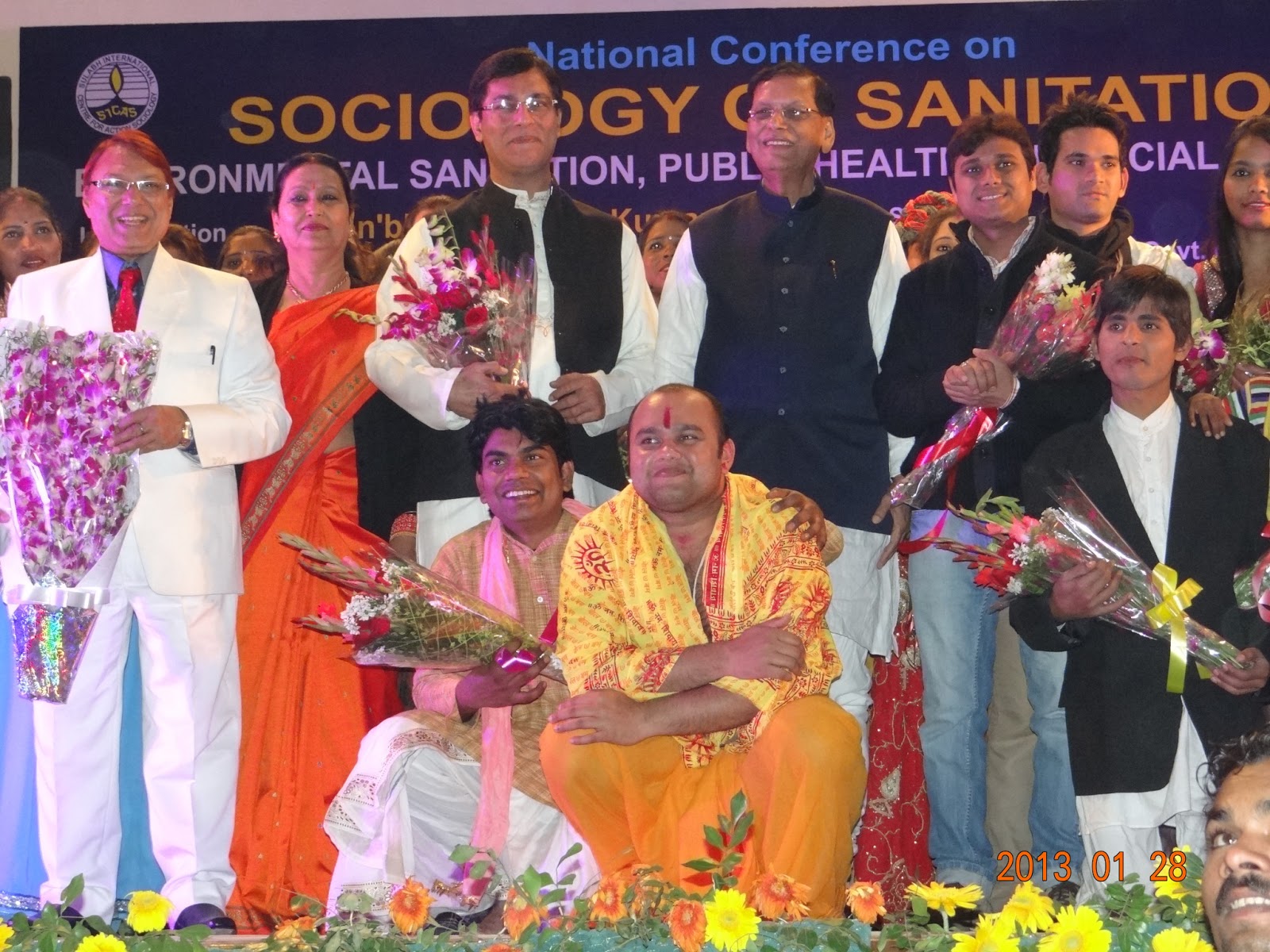
The cast of the musical drama play of Chandalika in a souvenir photograph with Dr Pathak (on the right of the Indian priest in orange)


The story is about a young girl who, like all other young girls, feels the heady surge of youth flowing through her veins and her soul reverberating with the vivacious music of life. Her heart is filled with little joys that come from simple things like having fun with her friends, buying inexpensive jewellery and eating tit bits of street food. Her dashing and young mind races to the boundaries of freedom pushing at the social barriers that have been set about her.

But, alas, she must limit her joys and her freedom only to her disobedient mind and not actually seek to see such desires reach fruition since she was born with insurmountable social and economic handicaps. She was born in an impoverished and suburban locale into a family where her parents spent all their times working to meet both ends meet and go about the basic activity of sustaining their lives.

Her parents spent all their times working to meet both ends meet and go about the basic activity of sustaining their lives

Her parents would genuinely give her the world to play with if they could, but they have limited means with no chance whatsoever of ever changing their circumstances. To add to her woes she was born into a pathetically low caste, who were relegated since time immemorial to the horrific and dirty menial jobs.

Their ancestors walloped in the dirt and tar of their livelihoods and were shunned by the city and its people. They were untouchables who, as religious texts say, were on a par with pigs and dogs and it was but a curse of the worst sort to be born into the womb of a woman of her caste. Every time her youthful heart wanted to go out and live life in joyous abandon, she would be spitefully reminded of her caste and class.

The girl had little option but to concede to her fate and accept the religious and social hegemony that existed. Of course, it was only conceding defeat and not accepting it. Her rebellious mind refused to accept the treacherous social and religious order and she defied in her mind the powers that be.

She refused to accept a religion or a society that denied her very human identity. But then again what could a young girl do but to resign to her fate and the unquestionable power equations that far predated her small life?

A young man asks for water

It was one hot summer afternoon when she was near their local water spout filling her vessels when a young man stopped by to ask her for some water to drink. Surprised at first she realised he must not be from around here and politely informed him that she was an untouchable so he was asking for water from the wrong person.

The young man showed little reaction to her logic and said he hardly cared what caste she was. All he cared for was some water since he was very thirsty and as long as she was a human like himself, she could very well help him quench his thirst.

The man drank from her vessel and she found out he was an activist who spoke for social justice and equality. He had shunned the hegemonic religious and social order he was born into and had taken to a philosophy of life that spoke of inclusiveness and emancipation of the underclass. He spoke with ease with her and then moved on to where he was headed.

This unbridled sense of equality pushed the girl into an entirely new yet strangely familiar territory. She found the resonance of everything she had felt all her life in what the young man had told her. She found a voice to her suppressed rebellion in his politics. 

In his political vision she found the arms to fight for the liberation of her own self and those like her who. She spread the word amongst her near and dear ones, who at first thought the heat had gotten to her head, but then began to see the sense in it all.

People of the lowest of the lowest caste are forbidden to have contact with those of the upper castes. Here a shop owner pours flour on a cloth for the untouchable. This is after he washed the money that the untouchable person produced to buy the flour.

Her new found passion fired the will of her otherwise latent compatriots who started to take steps and organise themselves. Of course, they knew that showing allegiance to the politics shown by the young man was certain to raise the wrath of the current rulers who would come down upon them like a black storm bringing ransacking their community.


The girl even wondered aloud at times if she had overdone it and pushed her community into the mouth of certain death and torture. But by then the fire had spread into their minds and they themselves saw the light and vowed to fight till victory or death. 

They were convinced that if they could work the skin off their backs to fulfil every need of those who ruled them, no matter how whimsical or fanciful the need, they could very well work hard enough to earn a life of dignity for themselves and their children in times to come.

Many supreme sacrifices later and weathering the rage of the torturous social and political tempest that mercilessly rained down upon them, they came to earn their first victory. The victory was of finding a space in the political process that ruled them. 

For this they rallied behind the young man who had first showed them the truth of what ailed them and showed them that the exploitative system was not an unquestionable truth of life but could be questioned and made answerable even to those the system claimed were far too lowly to ask questions.

 
What is written here is a simple paraphrasing of what Gurudev RabindranathTagore wrote in his epic Chandalika – the story of the daughter of a family of the Chandal caste; a community that is till date relegated to the horrific task of burning corpses; a community that till date bears the wounds of one of the most hellish form of social and economic oppression in our history.


Gurudev Tagore was far from the apolitical arty person that the many sections of our privileged countrymen portray him as. The elites of the culture world have filtered Gurudev's work and portrayed it in their selective ways keeping his art, which is of undeniable calibre, but sniping away at his ideology and politics so as to suit their way of life and keep the cycle of hegemony intact. 

They have used their money and influence to portray Gurudev's tunes, strokes and words as a near esoteric art to be practised only by some high priests of culture while the mere mortals may only look from afar.

The truth, however, is diametrically opposite. Gurudev learnt as much from the socially out caste Baul minstrels as much as he did from what was best in the progressive Western arts. He embraced people and their lives as his own irrespective of their caste and class in times that were even more polarised and exclusive. He travelled and read extensively and assimilated into his open mind and heart what was best from everywhere.

He spoke of all that which spoke of the need of being a just human and building a society based on love. He was unequivocal in his support for liberty and social justice espousing the true spirit of freedom that went far beyond the narrow walls of racial or nationalistic pride. It is not a mere co-incidence that he wrote the masterpiece with the protagonist as an out caste Chandal girl who is enlightened by an adherent of the Buddhist philosophy of equality.

Sourced from The Hindu written by SIDDHARTHYA SWAPAN ROY


President Sirleaf sounds alarm on poor global water supply and sanitation


Liberian President Ellen Johnson Sirleaf said $260 billion in economic losses annually is directly linked to inadequate water supply and sanitation around the world.

She made the comment Wednesday in Monrovia at the start of a three-day UN high-level Panel of Eminent Persons meeting.

The group is tasked with producing a report in May this year for UN Secretary General Ban Ki-Moon with recommendations for a post-2015 global development agenda.

WaterAid, the leading charity for clean, safe water and sanitation in the world’s poorest countries said last year that 2.5 million people around the world would be saved every year if everybody had access to safe water and adequate sanitation.

Nelson Gomonda, the Pan-Africa Program manager for WaterAid, said President Sirleaf’s comments added new impetus to the crisis.

“We believe that coming from the president of Liberia and also as the Goodwill Ambassador for Water and Sanitation in Africa is a good sign that we are beginning to make the High-Level Panel members and also at the highest political level in Africa realize that we don’t have to pay a blind eye to the water and sanitation crisis that we have, which, if we don’t address may have severe impact on the development agenda of Africa,” he said.


WaterAid said in a press release that the current Millennium Development Goal targets on water and sanitation have had differing levels of progress and political and financial support.

It said while the drinking water target was met five years early in 2010, the sanitation goal is decades off track. WaterAid said progress in Africa is specifically worse, with sub-Saharan Africa expected to meet the sanitation goal a century and a half late.

Gomonda said governments need to increase their investments in water and sanitation because the two areas are essential to global economic development.

“What needs to be done is to make sure that African governments are able to meet the commitments that they have made and making sure that resources and domestic allocations to sanitation are increased and are matching with the commitments that they made at their various summits that they have had, particularly during the summit of the international year of sanitation in 2008,” Gomonda said.

Saturday, January 26, 2013

Sulabh Foundation celebrates Republic Day in grand style

Gosh! Its been nearly four months since I  last updated my blog, that's suicidal. Am back in the beautiful land of India and home to the Dr Bindershwar Pathak and his sanitation movement that has and continues to make headlines in India and countries afar. I will be here for three weeks and be sure that I will be constantly updating you on what's going.

Today is Republic Day in India and I had the immense pleasure of taking part in the celebrations that were organised by Sulabh and they involved the hoisting of the flag, the taking of an oath of allegiance by students of Sulabh Public School, speeches from the Founder and yours truly as well as a very exciting cultural programme that included a Vandemataram dance, by students of Sulabh literacy mission, a patriotic song - We are children of India, a presentation by the New Princesses of Alwar and Tonk (former human scavengers), a Chandalika short play and a street play. In a nutshell, my morning was very well spent. 

Dr Pathak taking part in the hoisting of the Indian flag


Students of Sulabh Public School salute in respect after the flag was hoisted whilst singing to the National Anthem


Students of Sulabh Public School taking the oath that calls for one to love their country, take each other as brothers and sisters and for patriotism

Cultural dance

Cultural dance

Cultural dance

Cultural dance
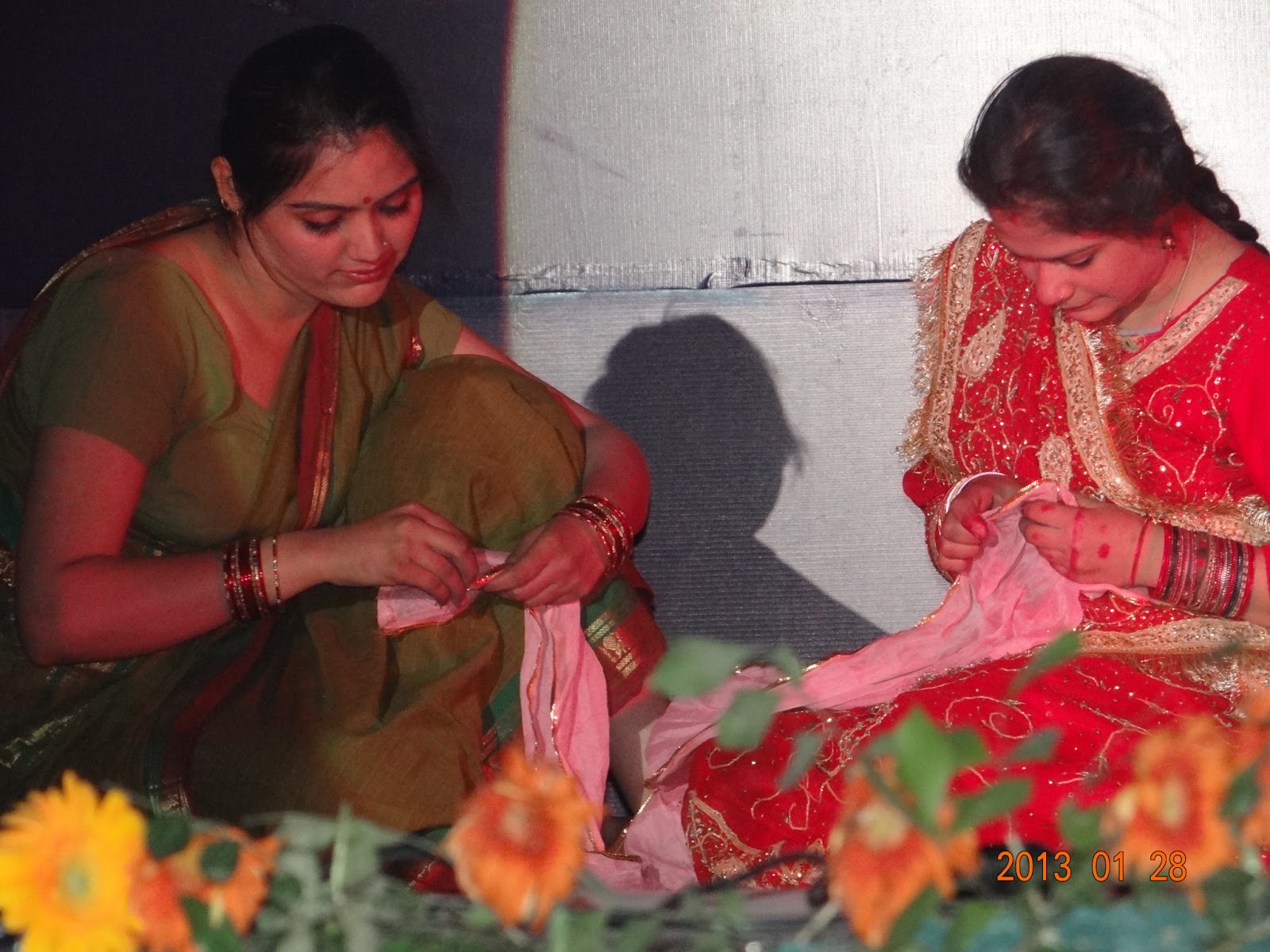
Students of Sulabh Public School dramatise a play entitled Chandalika with lessons on untouchability and witchcraft


Allow me to quote from a book entitled India Express by Daniel Lak, 'Now that Ghandi is long gone, it falls on a remarkable organisation called Sulabh International to agitate for reform. In Sanskrit, a local language in India, Sulabh, is the word for 'easy'. The name of the organisation and the thinking behind it, are the work of its founder, Dr Bindershwar Pathak. Pathak is an upright, handsome man in this sixties who looks far younger. Its that easy, he repeats, many times during our conversation. His goal is nothing less than safe, hygienic sanitation for all of India's billion plus population and liberation for the remaining 250,000 sweepers."
The New Princesses of Alwar and Tonk. These beautiful ladies used to be human scavengers who had to carry human waste on their heads but thanks to the creative and dedicated work of Dr Pathak through the designing of a simple flush toilet, they no longer needed to do so.

No play is complete with the exquisite sounds that are produced by Indian musical instruments


After the magnificent job that was done for students of the public school and the literacy mission, it was fair that Dr Pathak gave a group picture and started the first verses of the National Anthem signalling the end of the programme


Wednesday, October 24, 2012

No toilet? Then no bride: Indian government's bizarre new campaign to increase indoor lavatories


Dr Pathak unveils a new toilet

 Indian families have been instructed to ensure their future son-in-laws can provide an indoor lavatory before marrying off their daughters.

The ‘no toilet, no bride’ campaign has been launched by the government after it emerged that that more people have a mobile phone contract than access to a toilet.

The instructions were given by the country's Minister for Rural Development, Jairam Ramesh, who recently angered religious groups by claiming India has more Hindu temples than indoor bathrooms.

Over 75 per cent of the 1.2 billion population currently have a mobile phone subscription.
In comparison, only 50 per cent of households have a lavatory and 11 per cent have one connected to the sewerage system, according to the 2011 census.

This has led to Mr Ramesh calling on families to not only consult astrology when deciding the perfect match for their daughters, but also to check if the potential husband has an indoor toilet, the Daily Telegraph reports.

‘You consult astrologers about rahu-ketu (the alignment of sun and moon) before getting married.
'You should also look whether there is a toilet in your groom's home before you decide. Don't get married in a house where there is no toilet,' he warned during a speech to villagers in Rajasthan.

Earlier this year Mr Ramesh branded India the ‘world’s largest open-air toilet’ saying that 60 per cent of the people in the world who carry out their business in the open, live in India.

India is branded the ‘world’s largest open-air toilet’
 Speaking at the launch of an ‘eco-lavatory’ in June, Mr Ramesh said the country should be ashamed of this and that ‘even countries like Bangladesh, Nepal, Pakistan and Afghanistan have better records.’

Brindeshwar Pathak, founder of the sanitation charity Sulabh International called on the government to offer cheap loans to help families build lavatories and to make defecating in the open a punishable offence.

As well as a sanitary issue, the lack of proper bathroom facilities is a security risk for Indian women as tradition begs them to rise before dawn to go to the toilet.

This has led to a number of cases where women have been raped or assaulted whilst searching for somewhere to go to the lavatory under cover of darkness.

Sourced from Mail Online 

Fortnight of blissful life lessons with a ‘philanthropist’

By MASEMBE TAMBWE
One among thousands or maybe even millions African sayings say that when a person invites you to their house, they consider you a friend but when they invite you to their ancestral home, then consider yourself part of the family.
I had the immense privilege of visiting Bihar State in India where the Founder of Sulabh International, Dr Bindeshwar Pathak was born.
Dr Bindeshwar Pathak

 For those unfamiliar with Dr Pathak, he was born at Rampur Baghel village in Vaishali district of Bihar. Dr Pathak’s grandfather was a famous astrologer who, believe it not, predicted the death of his own sibling at a certain age that actually happened.
He had also predicted that the wealth that his son, Dr Pathak’s father would be left with would one day all whether away and that too, happened. His father is an ayurvedic (a holistic healing science) doctor and so he came from a prosperous, respected family.
Dr Pathak was the proverbial child with a silver spoon. He grew up in a sprawling house with a large compound. There were nine rooms including a prayer room and another where only atta, a flour used to make most South Asian flat breads such as chapatti, roti, naan and puri was ground. Water too was drawn from this room. 
This house still stands today and though it is in ruin, it all the same stands. I made a tour of the house and saw the unique well split into two by a wall. My host told me that it was built in such a way that one side was used by men while the other was used by women.
The reason for the split was that men should not catch a glimpse of women when the latter were drawing water to bathe. Bihar was and still is a very conservative state.
Bihar State
One very distinctive feature that I noticed was that there was no toilet in the compound.
Dr Pathak then told me every morning at 4.00 a.m, there was total chaos in the house as women had to get up early and complete their personal cleanliness before sunrise.
“Even though I would be in bed, I was aware of all the activity. Some woman picked up a bucket, another was drawing water, while some one would push another to hurry up. In case a woman in the house fell sick, she would have to relieve herself in a straw basket or a pot lined with ash,’ he told me.
During my trip to his home town, I visited the four schools that he attended. Back in his time as a student, there were two distinctive features, one was that there were no toilets and two, there were no female students.
As the tour progressed, I was fortunate enough to pump into one of his school mates who, when probed on whether he ever saw something special about Dr Pathak, said that his kindness was a rare trait, but like all other children at that age, he climbed trees and did other naughty things.
During the two weeks, I visited the capitals of the states of Madhya Pradesh, Bhopal, Rajasthan State in Jaipur, Tonk, Alwar and Delhi. However, the memories of Bihar, will linger on my mind for a long while, largely because of the countryside fresh air, the sights and sounds of the moving
trains, the fresh vegetables I mercilessly devoured and the thrilling stories I was told about the history of this great man who also happened to be my host, Dr Pathak and the birth of the Sulabh Sanitation and Social Reform Movement.
I realise now narrating the whole story of how Dr Pathak became ‘successful’ may take probably forever and so I will give snapshots of it. By the way the ‘successful’ is in quotes because for two weeks I tried cajoling Dr Pathak to admit that his work and sacrifices have been a success and totally failed. 
That’s just how modest he is but does say that, in reference to the technologies that he has developed over the years and that have made a difference to millions of people the world over, “You take a seed planted by someone else and water it. The fruits of the labour are just as sweet!”
Some key lessons I learnt from Dr Pathak, a person I am very proud to call a friend and a great host: Always keep your options open in life. Dr Pathak started out as a schoolteacher, joined the family of ayurvedic medicines, was supposed to major in Criminology but ended up being in the centenary celebrations committee for Mahatma Gandhi and got engrossed in sanitation.
Ayurvedic medicines
“Our movement is to restore the human rights and dignity of untouchables (the lowest caste who manually clean toilets). And to bring them into the mainstream of society. The toilets, biogas plants, all these are means to achieve that dream,” he kept reminding me. 
Messengers of God are everywhere. During Dr Pathak’s journey of establishing his now renowned NGO, he sought a grant from the Indian government of 70,000 Rupees and a 50,000 Rupee grant was sanctioned.
Unfortunately in 1971, the government fell and he was asked to meet one Rameshwar Nath. When Mr Nath saw Dr Pathak he laughed for he had expected a seventy year old man with a walking stick as the Secretary of the NGO.
 He told him that he saw that his work would create a dramatic impact in India but worried that asking for grants won’t have the desired results. He gave him a life lesson,” Don’t ask for grants, charge money for doing your work.” This has been the model Sulabh has adopted ever since.
There will always be hard times in life, keep God closest. Running an NGO is no easy task when you are not getting any work. During his journey, Dr Pathak had to sell the little property he still owned in the village and also had to sell his wife’s jewelry.
“I remember how girls whose parents could not afford a good enough dowry cried in their in-laws houses. People would taunt them that their father has sent them without a fridge or a car - your family has no status. When I got married, I could not afford to buy my wife the kind of
jewelry which is generally given to the bride and even that I had to sell,” he narrated to me.
It’s okay to act without thinking twice sometimes. Dr Pathak in the early days only specialised in transforming toilets connected to the sewage system into twin pit latrines. 
In 1974 the Patna Municipal Corporation Administrator asked him to build a toilet block in a span of 24 hours. You see, there was a large piece of open space opposite the Reserve Bank of India where two to three thousand of men and women used to relieve themselves. 
With 20,000 Rupees in his hand, he ordered his workmen to bring twenty truckloads of red sand. By the time it arrived, it was late evening. Then he told them to bring as many potted plants, brushes and trees as possible whatever the price.
Then a big pit was dug and filled with sweet smelling sandalwood. At 7am when the Administrator came, he was thrilled with the changes, you see his superior had wanted something to be done about the black spot and it was. That was another turning point of Sulabh International.
Sulabh International
I am currently reading a book titled “I have a dream’ by Rashmi Bansal that partly features Dr Pathak. His advice to young entrepreneurs is, “create your own identity and leave your own stamp in whatever you choose to take up. I told my son to take up some work other than Sulabh and to be number one in a field of one is a great feeling.”